

cup of tea

Put the kettle on – the nanotech teabag has arrived

Put the kettle on – the nanotech teabag has arrived

Not the usual cup of tea – nanotechnology now delivers clean, safe drinking water through a filter that fits into the neck of a bottle.

Take a look at this video in which Eugene Cloete demonstrates the teabag-style filter and literally tests the water.

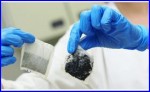
Developed at South Africa’s Stellenbosch University by microbiologist and Dean of the Faculty of Science, Professor Eugene Cloete and a team of polymer scientists from the Department of Microbiology, the recently patented filter looks easy to use.
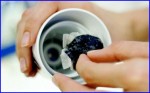
The high-tech teabag is the result of years of research and could be used to provide safe drinking water for communities living near polluted water streams.

Access to safe drinking water is still a major problem, particularly in sub Saharan Africa and Oceana, according to the World Health Organisation, so this new technology may be an innovative solution if it can be widely distributed.
Distribution and storage

Each filter can only be used for one litre of water, so availability may be an issue here, as will other factors such as safe storage of the filters, how easily they can be carried (maybe they should be distributed in small pouches) and what would happen if a filter keeps being reused rather than replaced.

“The water is cleaned right then and there when you drink from the bottle”


Eugene Cloete

The bottle that is used for instantly filtering the water is made of plastic and is reusable so there are no environmental issues here.

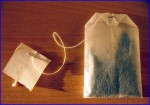
The “tea bag” part of the filter is made from the same materials as off-the-shelf roobios tea bags which is biodegradeable.


How the teabags work

This material is lined with nano-fibres which filter any contaminants in the water.

The bags contain active carbon granules which kill any bacteria in the water which passes through them.

Could disposal of the filters be problematic?

According to  Marelize Botes, one of the researchers at  Stellenbosch University “The nanofibres will disintegrate in liquids after a few days and will have no environmental impact. The raw materials of the tea-bag filter are not toxic to humans.
How the bottles will be distributed and how to ensure that users will be able to access a ready supply of replacement filters remains to be seen.

The filters cost only 3 South African cents (just under 0.5 US cents), but making them available to rural communities that have no monetary income could present a challenge.

34 Responses to “Put the kettle on – the nanotech teabag has arrived”

  1. Rob Jara says:

    “Each filter can only be used for one litre of water, so availability may be an issue here, as will other factors such as safe storage of the filters, how easily they can be carried (maybe they should be distributed in small pouches) and what would happen if a filter keeps being reused rather than replaced.”
    I think that’s the main issue here, the mass production and limitation of the product’s availability.

  2. GregP says:

    The idea behind this invention is absolutely brilliant for me! Although, I’m not completely sure how these nano ‘tea bags’ will be distributed in the areas mentioned in the article.

    Personally, I’m afraid this product will be used by rich people, tourists and such, buying it from highstreet shops for campers etc.

    • Debbie Todd says:

       They are talking of using it for campers and tourists as well.  The teabags cost less than 0.5 US cents each – I think it would probably be up to non-government agencies to buy and distribute them.

      • Rob Jara says:

         I think this should be enhanced to be able to filter larger quantities of water and be made available to remote areas suffering water contamination.

        • Debbie Todd says:

           I agree Rob – to me one litre doesn’t seem like a lot of drinking water.

        • GregP says:

          That would be a good idea, making it into bigger filters, that can be placed near water points, wells and such
          but then, will require someone keeping eye on them, changing them after exact amount of water being filtered

  3. Rob Jara says:

    my idea is the water filter being distributed to families where they can be taught how to use the filter for a longer duration.

    • Debbie Todd says:

      Rob, we would then need to know the implications of using the filter for more water than it’s been designed for.

      I also found the Life Straw:

      http://www.vestergaard-frandsen.com/lifestraw

      • GregP says:

        well Debbie, we need to know this implications in case of small tea bags as well – who will ensure they won’t be used for more than 1 litre?

        On a side note – I like the fact that storage bottles are reusable. According to some interesting calculations, it takes 5 times more water to create single use PET bottle then it actually can hold (i.e. 1 litre bottle requires about 5 litres of water to be produced, not mentioning oil required, greenhouse gas emissions and transportation costs)

        http://www.treehugger.com/files/2007/02/pablo_calculate.php

        • Debbie Todd says:

           Greg, I think these bottles would be great for when people are on the move (as would the personal Life Straw be) – and I had the exact same thought as you about how to ensure that the filters wouldn’t be reused – there would have to be a comprehensive education programme on this technology in place to make it work.

          I would imagine that people who collect their drinking water from a river would need something that could filter a bucket of water at a time.

          • Debbie Todd says:

            The LifeStraw Family filter looks as if it is relevant for piped water – but what about water collected in buckets.

        • Rob Jara says:

          but I doubt Greg that was their purpose of making those in the first place

          • GregP says:

            I would imagine that people who collect their drinking water from a river would need something that could filter a bucket of water at a time.

            Or, at least some kind of free to use by everyone tanks placed on river banks that people can use and filter the water they take from water points, in this case river
            And filters placed inside of these tanks. Still, we have the problem of changing the filters when needed

  4. Debbie Todd says:

     That’s a great idea Greg – I’m going to look around online to see if anybody is doing that sort of thing.

    • Debbie Todd says:

       I’m finding some information about slow filtering through sand – surely that would last longer than man-made filters? A good idea would be to use the technology in the teabag on a much larger scale. There could be water tanks installed alongside the water sourde with active carbon filtering systems. That way, the government could organise some sort of scheme that would rreplace the active carbon when needed. I know that active carbon can be cleaned for reuse as well.

  5. GregP says:

    I know I might be getting overexcited with this, but I imagine it is possible for nanotech guys to create a system within the filters to colour the water that is coming out of the tanks on river bank mentioned above into ‘emergency’ state colour (when time for replacing filter is getting close)and ‘not usable’ state colour or something like that?

    • Debbie Todd says:

       I’m pretty sure that could be done – colour changing technology has been around for a long time – I remember my daughter having one of those colour-changing t-shirts when she was younger!

      • Rob Jara says:

         I’ve found an article guys wherein they can filter water at high flow rates 
         http://www.azonano.com/news.asp?newsID=4950

      • GregP says:

        Yup, and I have read an article about using nanotech in food packaging, changing colours after some time to mark use by date coming close.

        • Debbie Todd says:

           I saw something about that a while ago Greg – nano-packaging, how cool is that. There’s also packaging that changes shape to suit the contents

  6. Rob Jara says:

    this one can be used for higher volume water and can certainly be utilized for areas that depend on water from rivers and the likes.

    • Debbie Todd says:

      That’s an interesting article you found Rob – it says that it’s being used in the food & beverage, chemical, pharmaceutical, metals, power generation, automotive and printing industries – surely it’s more important to give people clean safe drinking water!

      • GregP says:

        Unfortunately, it doesn’t say for how long it lasts.

        • Debbie Todd says:

           I think it will all boil down to costs and whether there’s the will to extend this type of technology to the people who really need it the most. It’s easily affordable by companies that need it for production – it would be impressive if each of those companies were to sponsor a water treatment system in a location in one of the developing nations.

          • Rob Jara says:

            that’s one limitation that scientists need to really improve on, assuming that these filters don’t really last long

  7. Debbie Todd says:

     Maybe the companies that manufacture these filters could sell them on a Buy One Get One Free basis and the free one would go to a sponsored project that couldn’t afford the filter

  8. Rob Jara says:

    My take is that the government, or any government for that matter should take a look into this technology and see how it can be utilized for the people who really need it.

  9. GregP says:

    Apart from this idea being very unlikely (buy one get one free), someone would have to pay for installation of this whole system on site – as those are mainly industrial use systems, they don’t come in do it yourself packages.

  10. Debbie Todd says:

     I agree Rob – I would be perfectly happy to pay a bit extra on my water rates so that the money could be used to provide safer drinking water to people in countries where it’s needed.
    Greg, in the UK, it’s possible to buy a goat for a village as a birthday present for your family members or to buy education for somebody in a developing nation (or to sponsor a child, for that matter). You can also buy a toilet for a village in a developing nation as a gift for somebody. The same sort of thing could be done with the equipment for this.
    Or communities in the developed countries could band together to raise money to put a filtration system in another country – a bit like the twin-towning that’s been going on for years, but this would be a lot more practical

    • GregP says:

      Sure, it is possible in many countries, not only in the UK, but buying a goat or an education course is a bit different size of investment, compared to sponsoring industrial type of water cleaning system, don’t you think?

      • Debbie Todd says:

        That’s why it could be something that would be done by communities or large organisations. There are water companies in the UK that we pay water rates to – we could be given the option to pay a bit extra to sponsor a water project somewhere that needs it.

        • GregP says:

          True enough, it might be some kind of a solution here. Question remains, could those systems be adjusted to serve people in the areas of Earth, mentioned in the article

        • Rob Jara says:

          That’s nice Deb, I think we also have some program like that here. but I think it would be more effective if government takes the program and promote it with proper education

Comment on this article