
Dunkirk spirit? ‘Essential services’ will now be redefined
Healthcare and groceries? Obviously essential, but what else? The reality? Name a sector, any sector, and the answer to whether there is anything at all that’s essential about it is…
Why not join an online-only socially-distanced startup?
These are the kind of startups that never require any face to face meetings From the application interview onwards, you will never, ever be expected to be in the same…
Is hosting your app in a proprietary cloud becoming too risky?
Are clients beginning to demand continuity, even in the face of disruption so severe as to potentially undermine the continuity of any hosting service, no matter how large? Even the…
Is this planet’s centralised infrastructure about to be put to the ultimate test?
Even its biggest fans don’t think all decentralisation will be quick or painless, and yet… Nobody, not even the most committed decentralisation enthusiast, underrates the daunting challenges, whether related to…
A truly social network where humans are (mostly) excluded
The truly driverless car is a distant prospect whose arrival will be preceded by cars driven not so much by their human drivers as by their need to learn what other cars know about the road ahead
Coping with startup founder setback blues
“Like being punched in the face repeatedly” is how Y Combinator’s Paul Graham characterises the devastating setbacks that founders have to be able to cope with. Here’s how you cope
Stand by: this is a platform alteration announcement
Due to an incident involving the wrong kind of interface design, all services by Apple, Google, Facebook and Microsoft will be subject to change without notice. We apologise for any inconvenience this may cause
What if the synapse isn’t really doing what we think?
It’s hard to find a more profound challenge to a central tenet of neuroscience: in our so far unrewarded struggle to locate our elusive memories within the junctions between brain cells, shouldn’t we also be looking inside the neuron itself?

Should the Oculus $2 billion have gone to this man instead?
Never heard of Oliver Kreylos? You will.
Is the ‘point’ of solar about to change?
Whilst panels were expensive, titling an array of flat rectangles towards the sun was the most economical way to gather light. Much cheaper panels may make this approach obsolete.
The wild frontier of innovation intelligibility: an edgy video
I’ve been having a serious struggle deciding whether or not to share this important video because I’m just not sure how much of a struggle with intelligibility you’ll be able to tolerate

Sam Altman, tomorrow’s Mark Zuckerberg?
Over $5 billion jump in valuation in one month, even though none of their highest valued investments has yet had an exit? At this rate, Sam’s startup club may start putting Facebook to shame
Human motor racing supremacy has five years left
In five years from today, no human driver will be able to win a race against an autonomous car.

Healthcare’s identity crisis: is a massive role reversal looming?
There was a point where professionals felt as if they were being turned into robots, forced to spend more time processing data about their patients than engaging with them as human beings.

Usability is utterly broken
The last time it was declared broken, it was Web browsing behaviour that totally invalidated ‘traditional’ usability testing: this was soon fixed with new metrics, but now there’s another elephant in the usability lab
Alas poor Oculus, I knew you well
Until the day before yesterday, it was the toast of the gaming hardware world: today, John Carmack’s illustrious involvement notwithstanding, maybe the Rift is just toast.

Musicians: video editing is now officially part of your skillbase
Just ‘gigging, recording and getting discovered by a record company’ is yesterday’s intro to a musical career. Nowadays, you need to be able to build your own online TV channel that does justice to your best songwriting and performances.

Probing the innovation management implications of iconic ex-Valver Ellsworth’s ejection
Promoting Valve’s quirky employee handbook as a manifesto for unfettered workplace creativity set Gabe Newell on a collision course when he hired the legendary geek goddess
Viewing the TV implications of Steam from 50,000 feet
Google TV, Apple TV, Facebook TV, Netflix, you need to watch your backs. A more ‘socially optimised consumer experience’ may give Valve’s Steam an unbeatable edge over other contenders for tomorrow’s TV
Turning churnalism back into journalism
Covering an innovation story? Re-hashing a press release may be better than nothing, but doing it whilst maintaining full disclosure and explicitly adding your own specialist perspective? Journalism!
How can a professional economist help innovative startups?
What special skills can an economist bring to help innovative startups explore new business models more effectively?
A formidable new contender on the tech review scene
His YouTube channel alone is an eye-opener: is a new standard for consumer technology review videos being set?

Could Luton turn out to be the UK’s first Silicon Town?
Everyone’s looking for the UK’s next startup hotspot, but they might not be looking in the right place

Is video content heading for the holodeck?
It’s time to ask whether recent technological advances should make us revisit some long-abandoned dreams about interactive content
The contest for your living room gathers Steam
Apple TV, Google TV and let’s not forget Facebook, Amazon, Microsoft or Sony. Here at the iij, our money is on someone else.
Top guitar innovation videos of 2012
Yes, you’ll find some pretty lame excuses for also including some (admittedly awesome) clips which are sometimes more about exceptional inspiration than innovation

The Achilles’ Heel of 3D Printing
Why additive manufacturing isn’t expected to take over large scale industrial production any time soon
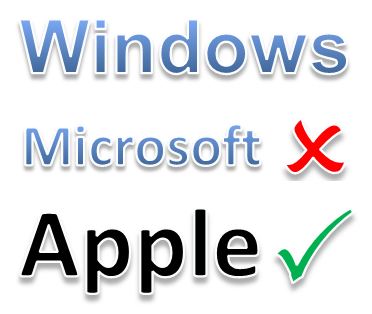
It’s official: Apple has windows, Microsoft doesn’t
Microsoft has ditched the window metaphor in order to make its OS feel like a mobile app, but Apple’s desktops, tablets and phones all still use a window metaphor

Will ‘talking to the camera’ continue to leave us mesmerised?
Video journalism may need to break the (TV) habit of a lifetime
Cultural literacy education theory humbled by games culture
A fashionable return to 19th century teaching methods is being challenged by astonishing findings on the impact of online games culture upon ‘hopeless’ struggling learners

Batteries and 3D printer included
Because giving away a free 3D printer with every big ticket hardware sale could ultimately cut support costs
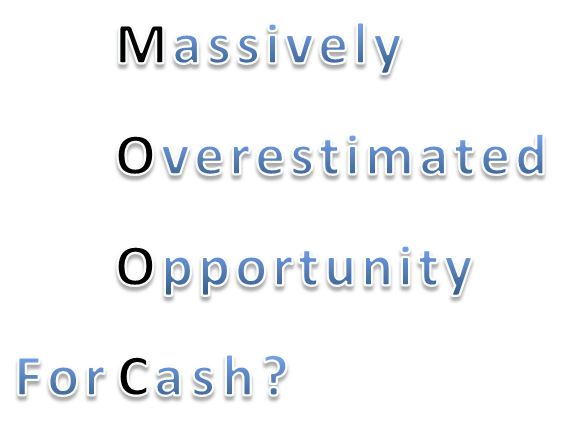
The MOOCs are coming! The MOOCs are coming!
The educational world, terrified by Massive Open Online Courses, is putting on a brave, smiling face and joining in, because it sees them as unstoppable and hopes it can somehow survive and even benefit from them
Science shows that self-discipline taxes the soul
We wisely use our ‘self-restraint muscle’ to get things done, but research shows that even exercising it just a little bit can turn the most robust of minds into momentary marshmallow

Coming soon to a learning experience near you: metacognitive strategies
Counter-intuitive way of reducing unnecessary pressure on students? Stop telling them how easy it’s going to be.

Can biodegradability square the econanotech circle?
Can we mitigate risk whilst pursuing benefit to humanity?
Why are we so bad at teaching struggling learners online?
What makes a struggling online learner struggle?
Nomination For the 2012 Infinitely Improbable Pivot Award
And you thought AirBnB’s Chesky’s early switch into repackaging breakfast cereals which he eventually had to eat in order to survive would clinch it? Nope. Not improbable enough.

Gamification isn’t enough: we’re missing something big here
Using the dynamics of games as a way of improving engagement in such things as work, marketing and education shows great promise, but something relevant that gamers do is being ignored
What if a time-travelling, pre-Apple Jobs & Wozniak applied to Y Combinator without a startup idea?
What kind of problem would YC have suggested for these prospective startup founders to work on?
Codecademy horror? 40 years of research into computer learning ignored
The ‘teach yourself to program’ site is just not equipped to have an intelligent conversation about any problems you’re having as you go along. What impact is this having on the dropout rate?
20 Percent Time 2.0
We pay your wages, but the IP rights for anything you create in your 20% time are 100% yours


How to detox bewildering tutorials
A strategy for recovering your confidence and fixing the problem when struggling with confusing course material
Reverse gamification’s next big test? Windows 8 Metro
Here’s concrete proof that Windows 8 is a puzzle that its intended users cannot solve unaided. Reverse gamification suggests that ultimately, this fact probably won’t make the slightest difference to its prospects for success

Why do startup accelerators get into trouble?
Although the ways that an accelerator can get itself into trouble seem to be almost limitless, the reasons why things go wrong can typically be narrowed down to just a few simple causes

It self-tunes, it’s not a $4,000 Firebird X and it costs $495
Am I the only one in the world who thinks the motor-tuned $4,000 Firebird has the best guitar shape ever?
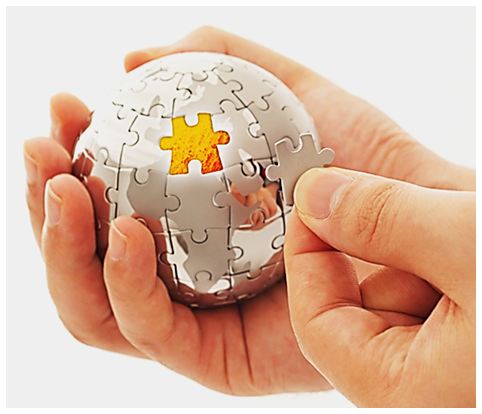
Reverse gamification
Puzzles are (deliberately) bad user interfaces. We’re told to love the look of things which have ‘invisible’ interfaces, because designers love simplicity. Hide those countless features, make it look simple. But this turns things into games with hidden rules. Not everyone wants to play.

Startup mentoring versus apprenticeship
The interaction between startups and startup mentors has a fundamental difference from ‘apprenticeship’, something which has major implications for the future of innovation
Startups below zero
So I’m calling it: the margin of costs beyond a founder’s living expenses is now officially zero. What next?