
Overcoming Innovator’s Block
The one infallible trick (well, it works for me) you can use when you’re trying to come up with a new project idea but you’re getting nothing but a painful…
Coping with startup founder setback blues
“Like being punched in the face repeatedly” is how Y Combinator’s Paul Graham characterises the devastating setbacks that founders have to be able to cope with. Here’s how you cope

Raise slightly less than you need?
Raising less probably gives you a shorter runway. Shortened runways test determination and the innovator’s ability to pivot. Taking too long to see whether the team can withstand serious setbacks can cost more than a restart.
The other six: VR hardware projects funded on KickStarter
Apart from the Oculus Rift, there are currently six other Virtual Reality hardware projects that have been successfully funded through KickStarter
Sam Altman, tomorrow’s Mark Zuckerberg?
Over $5 billion jump in valuation in one month, even though none of their highest valued investments has yet had an exit? At this rate, Sam’s startup club may start putting Facebook to shame

“There was no national infrastructure for this, so I’ve funded it”
An Intensive Care Unit where it’s needed. In every home. Millions already connected. He cashed out two startups, spent some exit money (he’s still got $7 billion left). The Steve Jobs of healthcare?
Alas poor Oculus, I knew you well
Until the day before yesterday, it was the toast of the gaming hardware world: today, John Carmack’s illustrious involvement notwithstanding, maybe the Rift is just toast.
Musicians: video editing is now officially part of your skillbase
Just ‘gigging, recording and getting discovered by a record company’ is yesterday’s intro to a musical career. Nowadays, you need to be able to build your own online TV channel that does justice to your best songwriting and performances.
Startup founders: allergic to experiences they should learn to love?
Do startups fail as a result of the founder’s attitude towards doing things they don’t think they need to do?

Why not bake augmented reality into your hardware startup?
Start looking for ways to ‘transcend physical user experiences’ by liberating your device’s mobile app from the constraints of the real world
The switch from doing jobs to starting startups: will we even notice?
Could our increasingly online lifestyles morph smoothly into self-employment if today’s culture of ’employee-based careers for all’ gradually fades into oblivion?
Lean Startup Methodology, Critical Design Theory: Separated at birth?
Lean startups use wild speculations about imaginary products to start conversations with customers aimed at eliciting real requirements. Critical Design aims to make things which provoke enlightening responses. Snap?
How can a professional economist help innovative startups?
What special skills can an economist bring to help innovative startups explore new business models more effectively?
Could Luton turn out to be the UK’s first Silicon Town?
Everyone’s looking for the UK’s next startup hotspot, but they might not be looking in the right place
Car healthcare arrangements? Incredibly better than our own
From the ‘innovation priorities in serious need of attention’ department
Mel Brooks Producers as a model for lean startups
Founders having an innovative idea, a fruitful search for a solution, generous early investors: what could possibly go wrong?
Instead of just scalable startups, a scalable startup ecosystem
‘Adopt lean startup methodologies’ is seen by many as the best advice to give startups, but how do we know if this advice is making a substantial positive contribution to the wider economy?

12 Robotics projects, all successfully funded using KickStarter
There are hundreds of other robot-themed projects on Kickstarter, I’ve just left out out the books or films about robots, as well as most art, education, hobby and toy projects
Startup mentoring: is there something missing?
The list of services that an officially accredited UK mentor is NOT allowed to provide just boggles the mind
Nine 3D printer startups have been funded on KickStarter
Hardware crowdfunding successes from under a thousand to well over half a million dollars
New Bond Thriller, With Social Impact
Don’t let the impenetrable jargon put you off. Social Impact Bonds, which bring “only paying for success” to public funding for privately-run social projects, are genuinely innovative. But will they make a real difference?

10M die every year, just begging for better diagnostics
Cheaply improving diagnosis in the developing world has an impact which is simply staggering. There’s a vast backlog of breakthrough science and technology waiting to be applied
Pivoteer skills
What makes people good at pivoting? 21 things which, if you can’t do them well, will probably keep your career in the world of innovative startups short and disappointing
Nomination For the 2012 Infinitely Improbable Pivot Award
And you thought AirBnB’s Chesky’s early switch into repackaging breakfast cereals which he eventually had to eat in order to survive would clinch it? Nope. Not improbable enough.
Fixing the ‘unsolved problem shortage’ that holds back potential startup founders
Shortages of easily-tackled unsolved problems are a first world problem: elsewhere, countless established ‘solutions’ are just unaffordable, each one a gift to any problem-seeking would-be entrepreneur
What if a time-travelling, pre-Apple Jobs & Wozniak applied to Y Combinator without a startup idea?
What kind of problem would YC have suggested for these prospective startup founders to work on?
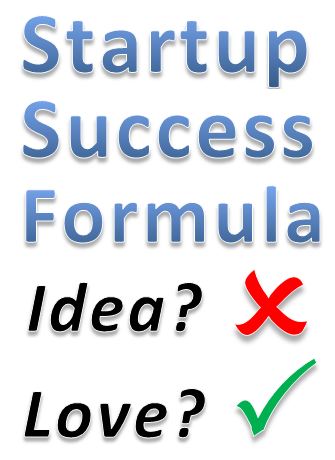
Love: the most important thing about startup founder matching
What will hold startup founders together through those ‘sense of impending doom’ moments? The fact that the business idea is great? Y Combinator’s Paul Graham thinks not: the relationship between founders has to be more important than the venture.
20 Percent Time 2.0
We pay your wages, but the IP rights for anything you create in your 20% time are 100% yours
Did Eric Schmidt really invent The Pivot before Eric Ries?
Google’s Schmidt talked about ‘morphing’ a project, but watching this Marissa Mayer video today, as she describes her boss’s suggestion three years before Ries’s, although the idea and the approach are different, the outcomes feel uncannily similar
Award for the most confusing little word in the startup vocabulary: Vest
A serious attempt to clarify some of the things which make vest and vesting a bit mind-bending for startups

What if you made startups exempt from ALL corporate regulation?
Health and safety rules? Hiring and firing legislation? Tax?

Double your (dole) money?
Startup founders, while their venture is still revenue-free, are not really self-employed. Unless they’ve also got a day job, they’re technically unemployed. This fact opens up opportunities for some really imaginative startup incentives
Accelerator and Incubator News
MySpace ex-CEO launches one, Dave ‘colourful language’ McClure hosts an LA Acceleratorfest, TechStar’s Brad Feld on Accelerators vs. Incubators, Cisco’s in-house guy goes solo, and much more

Startup mentoring versus apprenticeship
The interaction between startups and startup mentors has a fundamental difference from ‘apprenticeship’, something which has major implications for the future of innovation
Startups below zero
So I’m calling it: the margin of costs beyond a founder’s living expenses is now officially zero. What next?
Four questions that determine whether an accelerator should accept you
Jessica Livingstone offers her own feelings about what Y Combinator wants and I try to read between the lines
Dragging small traditional businesses into the startup innovation ecosystem
Small traditional businesses? They’re already ‘inside’ the startup world, aren’t they? No. They typically know nothing about such things as Lean Startup, Startup Weekend or Y Combinator, and even when they do, they think it has nothing to do with them. Are they right?

Self-help 2.0 is self-gamification
Disappointingly, behaviour change through ‘just gamifying your own health tracking’ doesn’t always work very well. Why not? It just might turn out that, for most of us, personal health tracking is not really a single player game.

iij top 20 upcoming innovation books for 2012
There’s a growing interest in introducing an entrepreneurial approach to innovation, whether its happening inside or outside the established organisation
Innovation fixation?
Are so-called ‘clone startups’ (those hoping to be acquired by the mothership after creating a successful, ‘local language lookalike’) too easily dismissed as ‘non-innovators’?
Toys as inspiration: Shrinky-Dink startup epiphanies
At 12 am one night in 2007, a revolutionary engineering idea popped into Michelle Khine’s head. The rest is history (and chemistry, physics, biotech, nanotech, solar: she seems unstoppable)
Startups: what happens when an economy completely collapses?
In places where prosperity has seemingly reigned forever, sometimes all the big employers and retailers can suddenly disappear: welcome to the startup-only economy. We probably need to start looking at places where this already exists
Need to recover from ‘startup overreach’?
Ty Danco’s ludicrously improbable but riveting tale definitely belongs in the history books, alongside AirBnB’s legendary ‘survive by literally eating your own marketing material’ yarn
Can entrepreneurialism be automated?
If Artificial Intelligence is going to automate the world’s entire workforce, we’re all going to need to give up any hope of employment and become startup entrepreneurs and innovation investors instead. They couldn’t possibly automate those, could they?
Should the UK government convert student debt into startup equity?
If much higher-than-expected numbers of students join the ranks of the long-term unemployed, most student loans are going to remain unpaid indefinitely. Is the risk of student unemployment higher than the risk of failure for a startup accelerator-boosted founder?
Post-exit startups: the friendly ghost in the job-creation machine
A new report by the US Bureau of Labor Statistics is being mistakenly interpreted as showing that startups are creating fewer jobs. This view somehow manages to completely ignore those odd things investors call ‘exits’.

Accelerators vs. incubators: an alumni panel debate video
Startups from Y Combinator, TechStars, Dave McClure’s 500 Startups and Idealab tell us what life feels like, including being rejected by Y Combinator and successfully reapplying!
Has Scoble suddenly turned anti-Lean Startup?
He just said: ‘I hate the term “minimal viable product.” That’s like telling me “we’re shipping without any features because, well, our investors and advisors told us to ship and fix the product later.”

What do we really know about startup acceleration mentoring?
Investors treat ‘startup founders entrepreneurial inexperience’ as an occupational hazard. Accelerators ‘parachute-in’ entrepreneurial experience in the form of ‘startup acceleration mentors’. Isn’t it time to ask some big questions about this?