
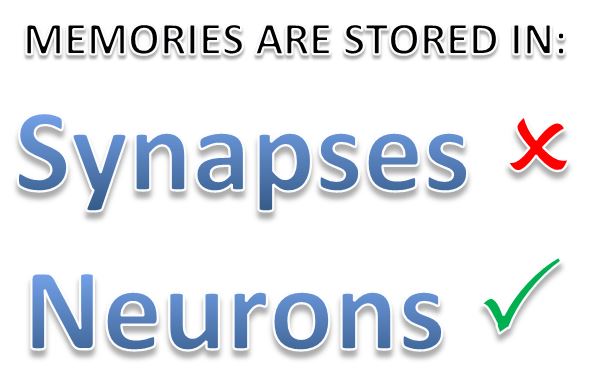
What if the synapse isn’t really doing what we think?
It’s hard to find a more profound challenge to a central tenet of neuroscience: in our so far unrewarded struggle to locate our elusive memories within the junctions between brain cells, shouldn’t we also be looking inside the neuron itself?
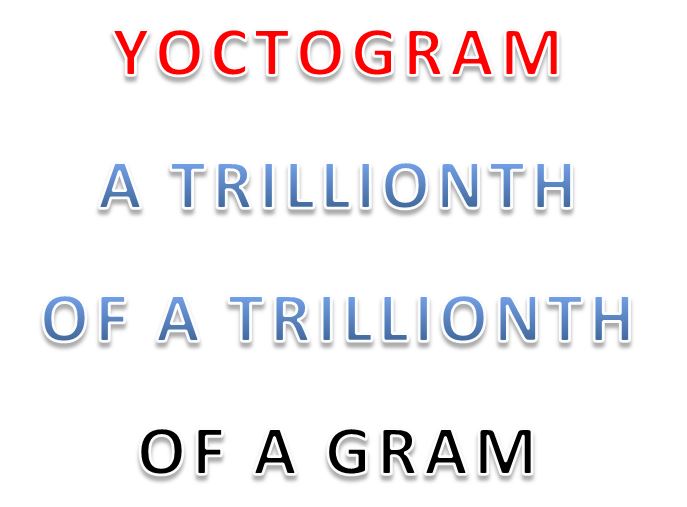
The wild frontier of innovation intelligibility: an edgy video
I’ve been having a serious struggle deciding whether or not to share this important video because I’m just not sure how much of a struggle with intelligibility you’ll be able to tolerate
Which new technology market is expected to reach $177 billion in five years?
Suddenly nanomedicine is on the tip of everyone’s tongue, but ask those typically clued-up about science and technology to define it: the answers may be surprisingly inconsistent
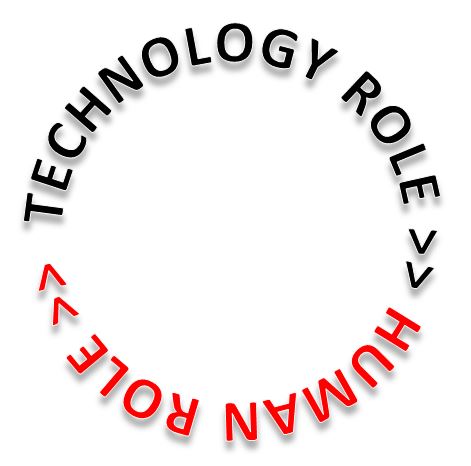
Healthcare’s identity crisis: is a massive role reversal looming?
There was a point where professionals felt as if they were being turned into robots, forced to spend more time processing data about their patients than engaging with them as human beings.

“There was no national infrastructure for this, so I’ve funded it”
An Intensive Care Unit where it’s needed. In every home. Millions already connected. He cashed out two startups, spent some exit money (he’s still got $7 billion left). The Steve Jobs of healthcare?
Are robots with analog AI the future?
Digital brains are just too big, slow and unreliable to interact seamlessly with the fast-moving natural world. Human interaction may be the only phenomenon slow enough to make digital look impressive
What is soft robotics?
Solutions to just about every hard engineering problem in robotics can be found in the biology of animals, where nature seems to be telling us to ‘take a softer approach’

Car healthcare arrangements? Incredibly better than our own
From the ‘innovation priorities in serious need of attention’ department
12 Robotics projects, all successfully funded using KickStarter
There are hundreds of other robot-themed projects on Kickstarter, I’ve just left out out the books or films about robots, as well as most art, education, hobby and toy projects

Post-Genomics: Wikipedia says no
There is no Wikipedia article on this subject at the time of writing, but it is now a well established field which cries out for a much wider public understanding
Can biodegradability square the econanotech circle?
Can we mitigate risk whilst pursuing benefit to humanity?

Microfluidics: micro, because biotech isn’t just nano
Two important new introductory talks about the background and latest developments in ‘lab on a chip’ technology

10M die every year, just begging for better diagnostics
Cheaply improving diagnosis in the developing world has an impact which is simply staggering. There’s a vast backlog of breakthrough science and technology waiting to be applied
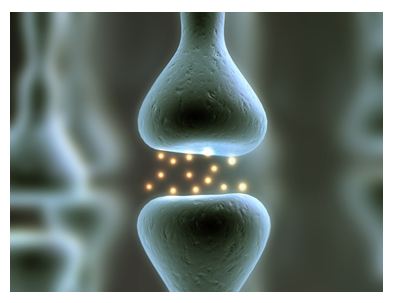
Major debate video: Is ‘who we are’ more than just brain-wiring?
Which side are you on? Are you a ‘connectomist’ who believes that once we fully map the connections in the brain, all it’s secrets will be revealed? Or are you ‘connectome-quizzical’ and looking for a wider range of perspectives before taking up a position?

Video: talk brings you up to date on just about every major field in genomics
A roller-coaster ‘how we got to where we are today’ tour by the US government’s Director of Research, starting with a look back to the point eleven years ago when the momentous results of the Human Genome Project were made public for the first time
Humanoid, moi? We’re all Stepford wives now
It’s 1996: students experiment with being cyborgs. That strange circuitry covering one eye? People imagine they’re disabled, offer them chairs. Nowadays you’d need to pry our ubiquitous connections to the borg collective (er, sorry: ‘cloud’) out of our cold, dead hands. So are we there yet?
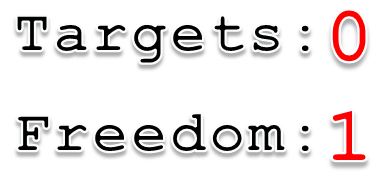
Scientists, so impractical? The results are in: Commercial Targets: 0, Freedom: 1
Scientific creativity. An engine of growth and innovation, held back by a lack of market focus and managerial discipline? So a stricter commercial regime should turn science into a lean, mean, innovation machine, right? Well…
What do neuroscientists really know?
Why is neuroscience suddenly such a hot topic right now? Is it just that the latest brain scan technology allows us to see more detail? The answer is yes, but the implications are far bigger
She’s busy composing new biological symphonies
What’s happening to bioengineering, in the ‘post-life-synthesis-announcement’ era?
How does nature create nano size motors?
There’s so much talk of biologically inspired innovation, I thought it was about time to start tracking down briefings on ‘how nature got there first’

Source code of human vision recently cracked
The more you think about what she’s saying, the more shockingly unthinkable it seems: can we now really see what an eye sees without us needing its brain in order to see it?

Ironic descendant of massive iron rod-through-brain accident survivor
One irony is that Fred Gage is one of the world’s leading figures in neuroscience, a discipline which was largely spurred by Phineas Gage’s miraculous survival. Another relevant irony (noted in the Wikipedia article about Fred) is that Phineas (1823 – 1860) had no children

Where is the computational juggernaut driving open science?
Science is ‘going virtual’ in a big way: rapidly escalating computing horsepower is turning lots of real-world research into simulation-based experimentation. Is this helping or hindering the latest open science initiatives?

iij top 20 upcoming innovation books for 2012
There’s a growing interest in introducing an entrepreneurial approach to innovation, whether its happening inside or outside the established organisation

Toys as inspiration: Shrinky-Dink startup epiphanies
At 12 am one night in 2007, a revolutionary engineering idea popped into Michelle Khine’s head. The rest is history (and chemistry, physics, biotech, nanotech, solar: she seems unstoppable)

And so then you just reduce the scale by fifteen orders of magnitude…what?
No, you don’t need to be a brain surgeon to find this fascinating: bio-integrated electronics is full of unimaginably weird but useful things you can do with things like, you know, live brains. It’s all about making electronic things rubbery

Will continuous brain scanning implants make jury trials unnecessary?
Neuroscience offers the prospect of an incontrovertible record of the intentions behind everything we do, so jury trials may eventually be deemed unnecessary. But no chip implanted? Guilty as charged!
Metagamification in Minecraft
Just trying to describe why over two million viewers think this frivolous-looking video is jaw-dropping will inevitably come out sounding like gobbledygook to all but those who already fully appreciate the sensational breakthrough it represents
Innovation competitions: why we need more of them
We’d all be forgiven for imagining that TechCrunch Disrupt and the DEMO Conference were the only regularly held innovation competition events worth talking about, as far as the tech media were concerned. So imagine my surprise…

The new iij top 20 upcoming lean books
At least five of these forthcoming titles major on a healthcare or safety aspect, illustrating just how far this particular management approach has come from its original niche

Computation: digital today, analog tomorrow?
Nature chuckles at our feeble, stumbling efforts at computation. Its analog computing resources effortlessly deliver dazzling practical intelligence at microscopic scale with zero tolerance for wasted power

Biomimetic business modelling?
If McKinsey’s believe in it, then even if you are unsure, you’d better get the best briefing you can: these videos may raise just as many questions as answers, but they’re a good starting point

What can you see at a trillion frames per second?
At that speed, you can see things that you shouldn’t be able to see at all, things that the camera isn’t actually pointing at. Wherever light has been, as it bounces around our world, it can tell us a story about its journey, letting us ‘see around corners’

The iij top twenty upcoming biotech books
Biotechnology book publishing is soaring. It’s making the job of keeping track of ‘what are the most interesting titles coming out, and when?’ almost impossible. This is our first attempt

Large Hadron Collider on a chip
We’re going beyond innovation here. Instead of the latest technology, we’re getting a tantalising glimpse of things that don’t yet exist, but are making exciting progress in the lab and could ultimately represent enormous advances in almost every field of science and technology if they fulfil their promise
In at the birth of biotech investment
Biology has replaced chemistry as the primary science behind drug discovery: how did this transformation begin, who was involved, and how did it get funded?

Ending the nightmare of blurred vision for half a billion poor
Even the dramatic recent reductions in the cost of spectacles and cataract operations are not doing enough to reduce the catastrophic impact that untreated sight conditions have in the third world, but strangely enough, our appetite for HD on our mobile phones will fix this
Innovation where it’s needed: malnutrition
The name Plumpy’nut may sound quirky, but this ridiculously simple product idea is already keeping countless famine-struck children from starvation and will save millions of lives

Prosthetics beyond disability: the bionic user experience
Looking for a video covering the latest developments in the interface between flesh, mind and machine, from fully functional transplants to limb replacements offering superhuman capabilities?

Where does 3D entertainment end and the rest of 3D innovation begin?
How do you draw the line between entertainment and non-entertainment uses? Who drives the innovation? Does industry get its inspiration from cinema and gaming, or is the entertainment business merely exploiting the technological advances made by the manufacturing industry?

Mainframes in our cultural DNA: gone today, here tomorrow?
The detail of our individual genetic makeup is already being used to make diagnoses and treatment decisions, albeit in a slow and cumbersome way. The sheer scale of the computational horsepower that doing this in real time will demand promises to bring the hulking mainframe computer back from the grave

Innovation, meet thy nemesis: healthcare services
Please, no more innovation! Just let us come to terms with the last lot of changes! We prefer standardisation to innovation! This is the sector where innovators are really gladiators

Can America still pick winners in the energy innovation race?
An opportunity to watch Steve Chu, US Energy Secretary, running us through a list of technologies which he hopes will help America reassert itself in the rapidly intensifying struggle for competitiveness and maybe even its very survival

30,000 Clinical Pathology Labs For A Dollar
No British press coverage for a major innovation story: biotech legend Una Ryan secures funding from both the UK’s Department for International Development and the Bill and Melinda Gates foundation

Yeah, like, there’s this professor that GROWS electrical kit
Apart from biology, our physical world is mostly either dumb, rock hard, or both. We use that hard, dumb stuff to make durable things like tools, vehicles and buildings. Biology, although soft, squishy and smart, somehow also manages to grow incredibly hard things, like shells and teeth. Maybe biology can teach us better ways to make hard stuff too
Sustainable, reversible science: beyond green, maybe even beyond renewable
This astonishing video takes environmental innovation to its outer limits: you’ll need to be pretty imaginative to find a way to invest in the ideas it explores

iij Top 15 Upcoming Innovation Leadership Books
Apart from being about new ideas and leadership (which is, after all, the entire reason for the list) there’s not much in common between these volumes, other than each one focussing on some unique but pertinent aspect

iij Selected Innovation Briefing: Biofuels
You’ll need to watch this video if your knowledge of the issues has so far been mostly constrained to news coverage
Photosynth as a metaphor for an even bigger challenge
Remember the software that could use lots of casually taken photos of a scene and somehow combine them into a 3D model that you could then navigate in a breathtakingly intuitive way? Well, what if you could do the same with independently created scientific research databases?

How handing healthcare ownership back to the patient might just work
It’s a funny old world where it takes Wired Magazine to show the medical fraternity how truly unintelligible (but life-critical) gibberish can be transformed in ways that allow us to take control of our own well being