
The wild frontier of innovation intelligibility: an edgy video
I’ve been having a serious struggle deciding whether or not to share this important video because I’m just not sure how much of a struggle with intelligibility you’ll be able to tolerate
Which new technology market is expected to reach $177 billion in five years?
Suddenly nanomedicine is on the tip of everyone’s tongue, but ask those typically clued-up about science and technology to define it: the answers may be surprisingly inconsistent

“There was no national infrastructure for this, so I’ve funded it”
An Intensive Care Unit where it’s needed. In every home. Millions already connected. He cashed out two startups, spent some exit money (he’s still got $7 billion left). The Steve Jobs of healthcare?
Are robots with analog AI the future?
Digital brains are just too big, slow and unreliable to interact seamlessly with the fast-moving natural world. Human interaction may be the only phenomenon slow enough to make digital look impressive
Can biodegradability square the econanotech circle?
Can we mitigate risk whilst pursuing benefit to humanity?

10M die every year, just begging for better diagnostics
Cheaply improving diagnosis in the developing world has an impact which is simply staggering. There’s a vast backlog of breakthrough science and technology waiting to be applied
How does nature create nano size motors?
There’s so much talk of biologically inspired innovation, I thought it was about time to start tracking down briefings on ‘how nature got there first’

Source code of human vision recently cracked
The more you think about what she’s saying, the more shockingly unthinkable it seems: can we now really see what an eye sees without us needing its brain in order to see it?

Where is the computational juggernaut driving open science?
Science is ‘going virtual’ in a big way: rapidly escalating computing horsepower is turning lots of real-world research into simulation-based experimentation. Is this helping or hindering the latest open science initiatives?

Toys as inspiration: Shrinky-Dink startup epiphanies
At 12 am one night in 2007, a revolutionary engineering idea popped into Michelle Khine’s head. The rest is history (and chemistry, physics, biotech, nanotech, solar: she seems unstoppable)
And so then you just reduce the scale by fifteen orders of magnitude…what?
No, you don’t need to be a brain surgeon to find this fascinating: bio-integrated electronics is full of unimaginably weird but useful things you can do with things like, you know, live brains. It’s all about making electronic things rubbery

Computation: digital today, analog tomorrow?
Nature chuckles at our feeble, stumbling efforts at computation. Its analog computing resources effortlessly deliver dazzling practical intelligence at microscopic scale with zero tolerance for wasted power
The iij top twenty upcoming biotech books
Biotechnology book publishing is soaring. It’s making the job of keeping track of ‘what are the most interesting titles coming out, and when?’ almost impossible. This is our first attempt

Large Hadron Collider on a chip
We’re going beyond innovation here. Instead of the latest technology, we’re getting a tantalising glimpse of things that don’t yet exist, but are making exciting progress in the lab and could ultimately represent enormous advances in almost every field of science and technology if they fulfil their promise

Where does 3D entertainment end and the rest of 3D innovation begin?
How do you draw the line between entertainment and non-entertainment uses? Who drives the innovation? Does industry get its inspiration from cinema and gaming, or is the entertainment business merely exploiting the technological advances made by the manufacturing industry?

The iij Top 10 Upcoming Nanotechnology Books
The subjects include: nanomechanics, nanoelectronics, nanocomputing, nanoimaging, nanowires and nanofabrication

Can America still pick winners in the energy innovation race?
An opportunity to watch Steve Chu, US Energy Secretary, running us through a list of technologies which he hopes will help America reassert itself in the rapidly intensifying struggle for competitiveness and maybe even its very survival

30,000 Clinical Pathology Labs For A Dollar
No British press coverage for a major innovation story: biotech legend Una Ryan secures funding from both the UK’s Department for International Development and the Bill and Melinda Gates foundation

Yeah, like, there’s this professor that GROWS electrical kit
Apart from biology, our physical world is mostly either dumb, rock hard, or both. We use that hard, dumb stuff to make durable things like tools, vehicles and buildings. Biology, although soft, squishy and smart, somehow also manages to grow incredibly hard things, like shells and teeth. Maybe biology can teach us better ways to make hard stuff too
iij Selected Innovation Briefing: Biofuels
You’ll need to watch this video if your knowledge of the issues has so far been mostly constrained to news coverage

An unexpectedly fresh perspective on nanotech
So this set of conference videos was supposed to be about regulatory issues. Shockingly perhaps, it turned out to be neither alarmist scaremongering nor shameless cheerleading.
At last! A new video introduction to nanotech
We know, we’ve kept you waiting. The last video intro to nanotech that iij posted was from a lecture given in 2008. This much more up to date talk was given just a few months ago: it was worth the wait

Who IS this guy?
Never heard of Oliver Kreylos? You will. He’s just transformed the Kinect from a hands-free game controller into a holographic camera. The demo blew many minds, quickly getting a million YouTube hits. He didn’t think it was that impressive: check out what he’s working on now

Where does nanochemistry belong in the world of nanotech?
To get some insight into this new discipline, you might find this video describing the background to a researcher’s eureka moment well worth watching. It’s a talk by Geoffrey Ozin, widely regarded as the father of nanochemistry

Next year’s innovation books
A carefully selected (but woefully incomplete) list of some fascinating titles that you can’t buy yet
Beyond incubation: the competence centre
Is this the answer to investor worries about incubator failure?

Put the kettle on – the nanotech teabag has arrived
Safe drinking water is still an issue in many parts of the world. Will the nanotech teabag provide a solution to this problem?
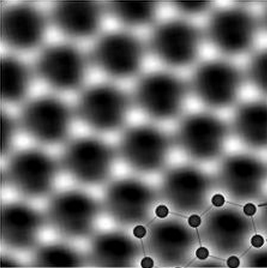
Carbon magnets have spintronics potential
Dutch researchers have explained how a form of carbon, acts as a magnet, paving the way for its use in biosensors, smart materials and spintronics.

Shapeshifting is no longer science fiction
Making things change to the shape you want : a video briefing on Shape Memory Materials
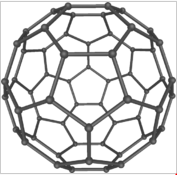
Giant Steps in Nanotech
Want to find out more about nanotech? This video gives a good explanation in a way that’s easy to understand.
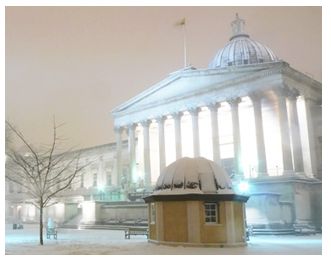
UCL hopes nano-level magneto-optics holds the key to quantum data storage
Novel magnetic materials could hold key to quantum computing

Nanotech funding holds steady
European nanotech firms turned over €44 billion in 2009, according to industry body IVAM. Orders and sales volumes were down but funding held steady.
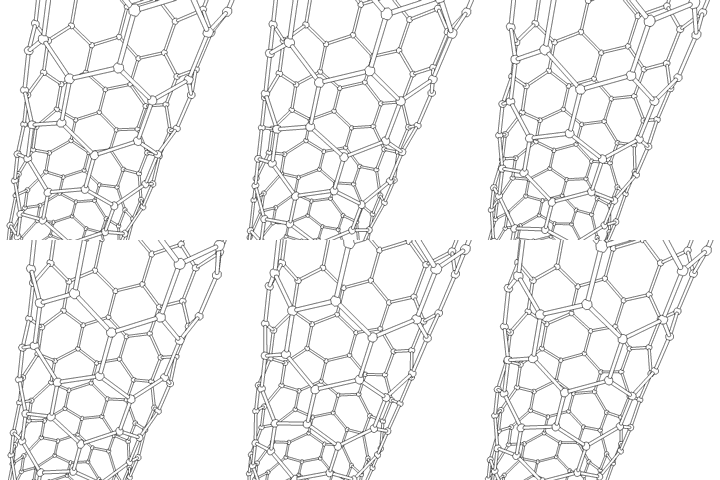
Bluffer’s guide to nanotechnology
A charmingly British academic video explaining the nuts and bolts, so to speak, of nanotechnology.